
Conference Interpretation Services: A Complete Guide for Bay Area Events
Why Conference Interpretation Matters
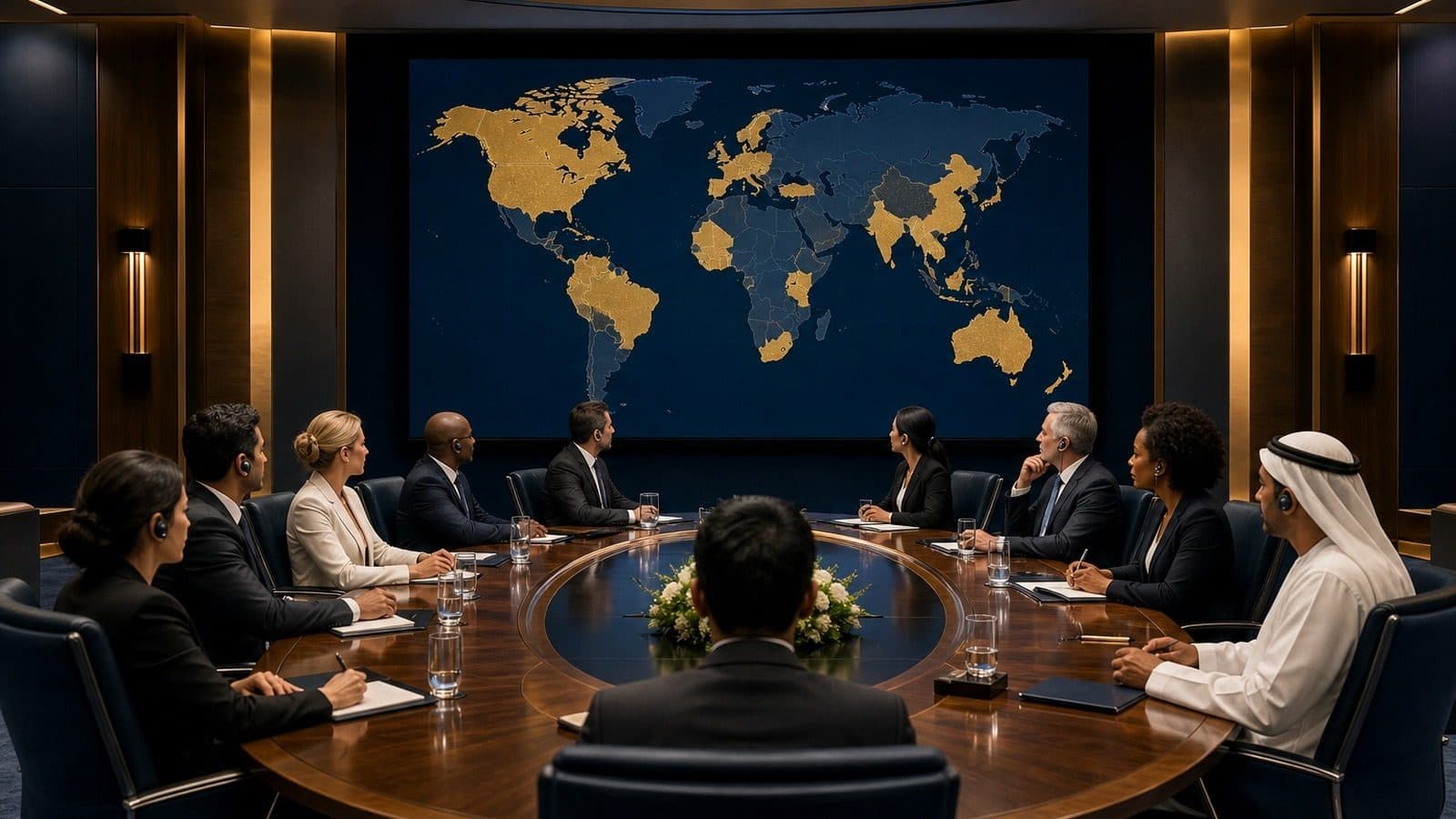
When an international conference brings together speakers, executives, or delegates from around the world, the quality of conference interpretation services determines whether meaningful communication actually happens. Without professional interpreters working at the highest level of precision, even a well-organized event can leave participants confused, disconnected, or worse — walking away with the wrong information.
At Auerbach International, we have spent more than 35 years helping Bay Area organizations bridge language gaps at international meetings, trade shows, academic conferences, and business summits covering more than 120 languages. In that time, we have seen firsthand what separates events that succeed across language lines from those that do not.
When participants cannot follow the proceedings in their own language — in real time — they disengage. A product launch loses its impact. A policy discussion becomes inaccessible. A keynote that took weeks to prepare lands without effect. Language is not a detail at international events. It is the foundation on which everything else rests.
The stakes extend beyond participant experience. In legal, medical, and regulatory conferences, a missed nuance or imprecise term can create liability or lead to flawed decisions. In trade and diplomatic settings, the impression your organization makes is inseparable from how clearly your message comes through. Professional conference interpretation protects both the event and the organization behind it.
Types of Conference Interpretation Services
Conference interpretation is not one-size-fits-all. Different event formats call for different interpretation modes, and choosing the wrong one can undermine an otherwise well-planned event.
SIMULTANEOUS INTERPRETATION
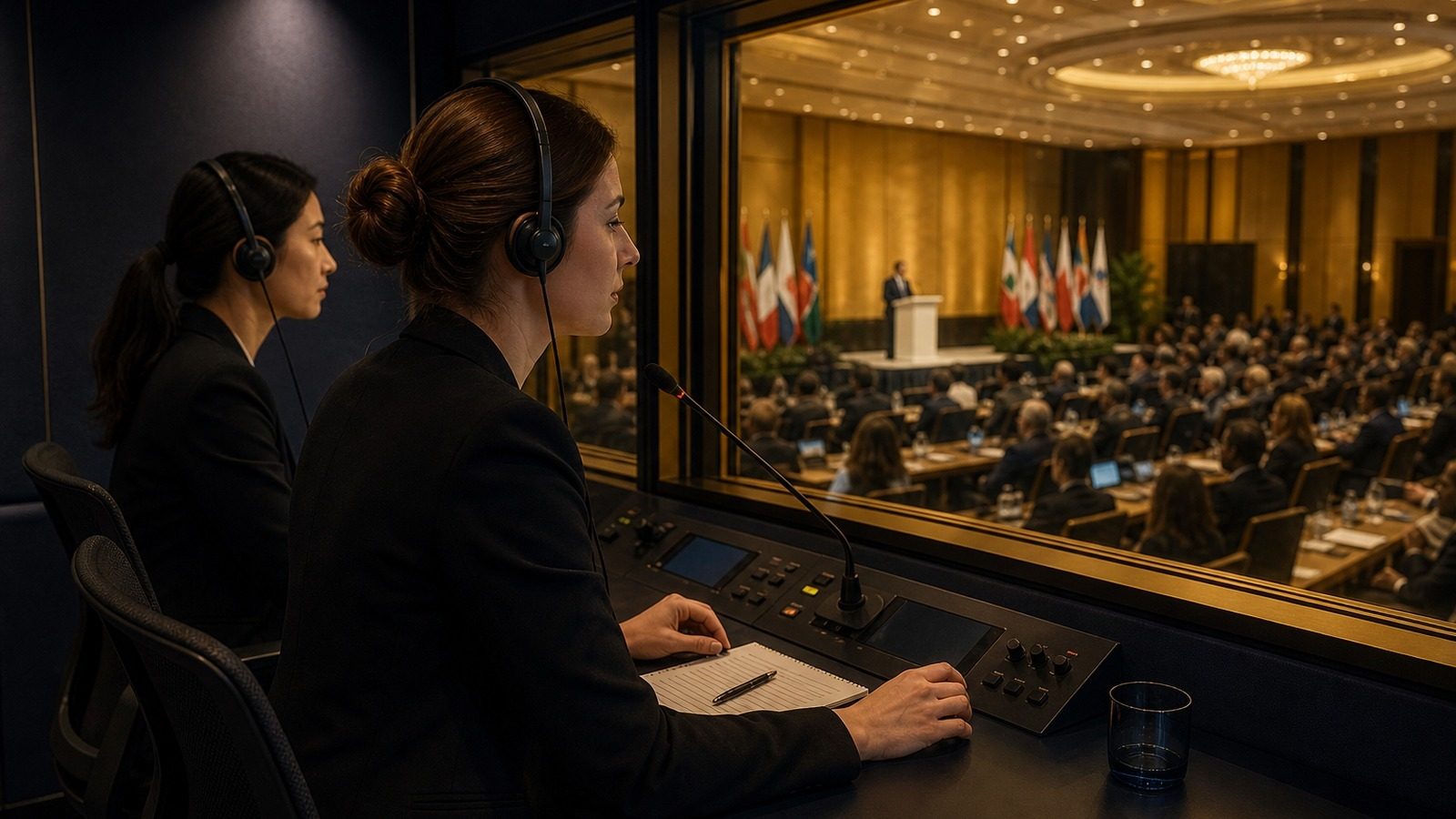
Simultaneous interpretation is the standard for large international conferences. An interpreter renders the speaker’s words into the target language in real time, with participants listening through earpieces or wireless receivers. Most international organizations rely on simultaneous interpretation because it allows the event to move at a natural pace.
A certified interpreter handling simultaneous work operates under significant cognitive load. He or she must listen, process, and speak at the same time — typically while working in a soundproofed booth with a partner, switching every 20 to 30 minutes to maintain accuracy.
CONSECUTIVE INTERPRETATION
In consecutive interpretation, the speaker pauses and the interpreter renders the statement in the target language. This mode is common in smaller settings. An interpreter working consecutively takes notes and must hold the full meaning of a passage in memory while delivering a complete, natural rendering.
WHISPERED INTERPRETATION (CHUCHOTAGE)
When one or two participants need interpretation in an otherwise monolingual meeting, a whispered interpreter sits beside them and quietly renders the proceedings. This approach is unobtrusive and requires no equipment, but works only for small groups.
REMOTE SIMULTANEOUS INTERPRETATION (RSI)
Remote simultaneous interpretation has grown into a standard offering for hybrid and virtual events. Interpreters work from remote professional setups or hub facilities and deliver audio through a digital platform.
Simultaneous vs. Consecutive: Choosing the Right Mode
The right interpretation mode depends on your event format, audience size, and budget.
- Simultaneous: Large conferences, plenary sessions — minimum 2 interpreters per language pair — no time added to event — multiple languages simultaneously
- Consecutive: Meetings, roundtables, press events — 1 interpreter per language pair — roughly doubles speaking time — one language pair per session
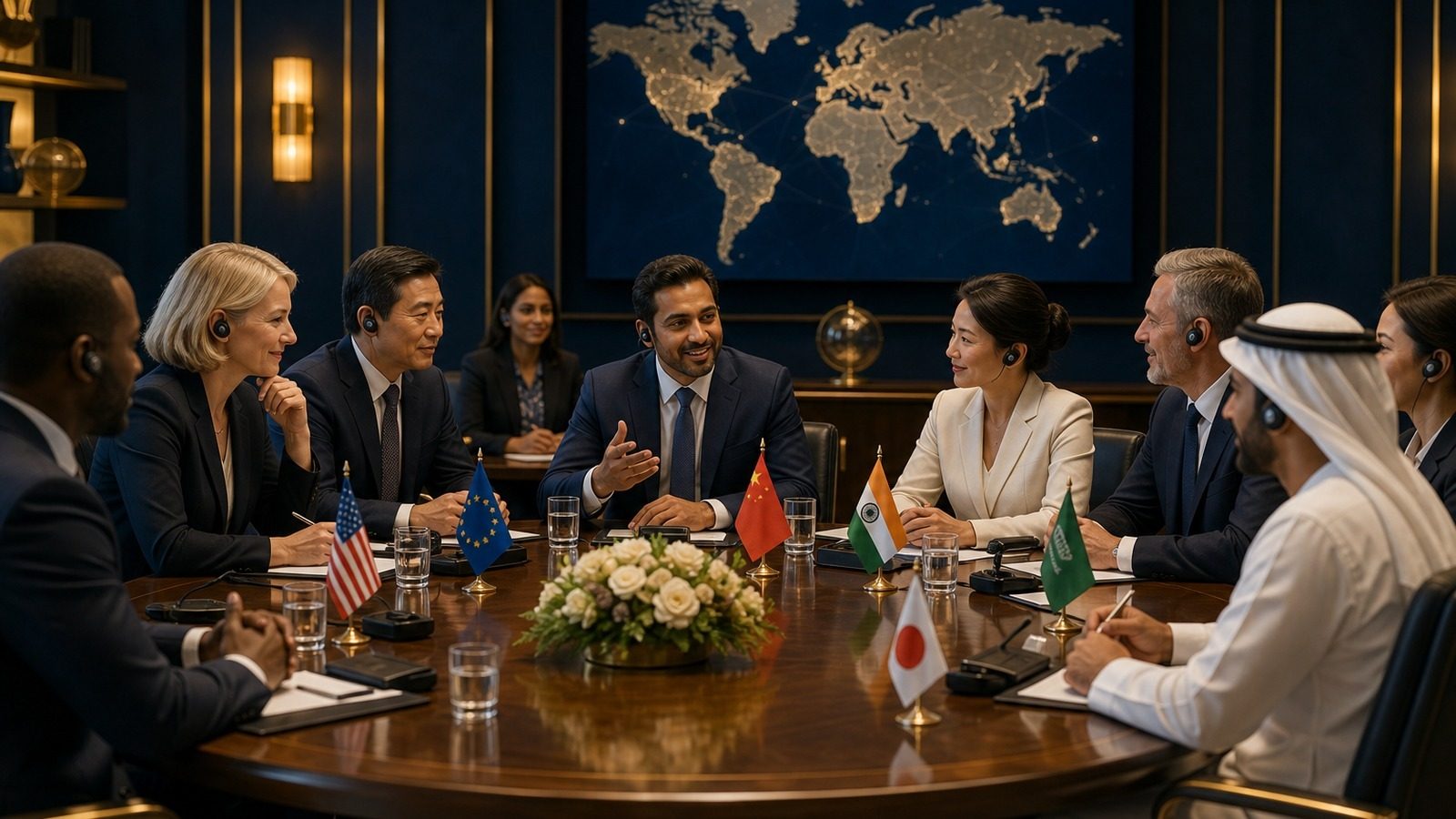
If your event serves participants across three or more languages at the same time, simultaneous interpretation is almost always the right choice. For one-on-one executive meetings with a small foreign delegation, consecutive interpretation often delivers better results.
What to Look for in a Conference Interpretation Partner
Choosing a provider for conference interpretation services is not the same as hiring a general-purpose freelancer. The stakes are too high and the requirements are specific.
SUBJECT-MATTER EXPERTISE
A professional conference interpreter does not simply know two languages. He or she has deep familiarity with the subject matter of the event. A medical conference requires interpreters who know clinical terminology. A legal symposium needs interpreters who understand procedural and substantive legal concepts across both legal systems. At Auerbach International, we match interpreters to events based on both language combination and domain expertise.
CERTIFICATION AND PROFESSIONAL STANDARDS
Look for interpreters certified by recognized professional associations such as AIIC (the International Association of Conference Interpreters). Certification signals that the interpreter has met an externally validated standard — not just that he or she speaks two languages fluently.
PLANNING AND LOGISTICS SUPPORT
A good interpretation partner reviews your agenda and materials in advance, coordinates with your AV provider, manages interpreter scheduling, and is available for pre-event briefings on terminology and speaker styles.
Equipment and Technical Setup
For simultaneous interpretation, the physical setup matters as much as the interpreters themselves.
INTERPRETATION BOOTHS
ISO-standard interpretation booths are soundproofed enclosures with a direct sightline to the stage and a clean audio feed from the room. Booths may be permanent installations or portable units brought in for temporary events.
RECEIVER SYSTEMS
Participants receive audio through wireless FM, infrared, or digital receiver systems. Infrared systems are preferred in sensitive settings because the signal does not pass through walls.
AV COORDINATION
Interpreters must receive a clean, uninterrupted audio feed from every microphone. Make the interpretation feed a named deliverable in the AV specification — not an afterthought addressed the morning of the event.
How Auerbach International Supports Bay Area Events
For organizations in the San Francisco Bay Area and beyond, Auerbach International has been the trusted partner for multilingual conference work since 1991. We cover more than 120 languages with depth of subject-matter expertise spanning legal, healthcare, technical, financial, and government domains.
Services include:
- Simultaneous and consecutive interpretation across 120+ languages
- Subject-matter specialist matching
- Remote interpretation for hybrid and virtual conferences
- Equipment consultation and AV coordination support
- Pre-event briefings and terminology preparation
- On-site interpreter management across multi-day events
Leaving interpretation logistics to the last minute creates real risk. Contact Auerbach International early to ensure the right team is available for your dates.
FAQs About Conference Interpretation Services
How far in advance should I book conference interpretation services?
For large international events, book at least six to eight weeks before the event. Events requiring rare language pairs or specialized expertise may need three to four months.
What is the difference between interpretation and translation?
Interpretation is oral and happens in real time. Translation involves written text and is typically not real-time. Both require deep language expertise but distinct skills.
How many interpreters do I need for a conference?
Simultaneous interpretation requires a minimum of two interpreters per language pair, working in alternating 20–30 minute shifts.
Can interpretation be provided remotely?
Yes. Remote simultaneous interpretation (RSI) is standard for hybrid and virtual events. Auerbach International can advise on platform selection and technical requirements.
What languages does Auerbach International cover?
More than 120 languages, including all major international conference languages — English, Spanish, French, German, Mandarin, Japanese, Arabic, Portuguese, Russian, Italian, Korean, and many others.
Does Auerbach International handle equipment?
We coordinate closely with your AV and production team on technical specifications and can advise on booth setup, receiver systems, and audio routing.
Ready to Localize Your Product for Global Markets?
For Bay Area organizations planning an international event, Auerbach International brings 35+ years of expertise and coverage across 120+ languages to your conference.