
When the Manual Gets It Wrong: Manufacturing Translation Services for Bay Area Companies
1. Why Translation Errors Cost Bay Area Manufacturers More Than They Think
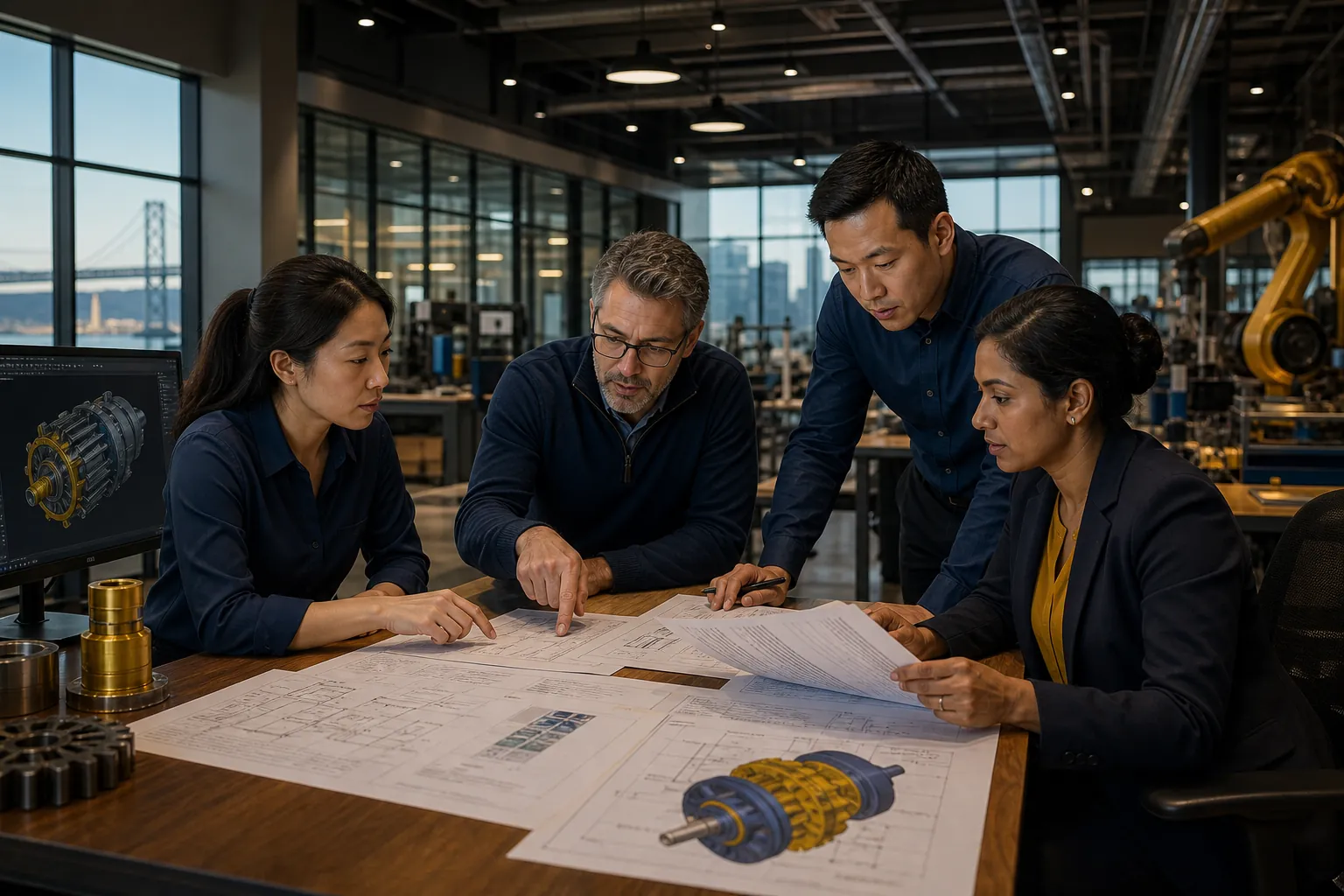
The San Francisco Bay Area is home to some of the most complex manufacturing ecosystems on the planet. Semiconductor fabs in San Jose, medical device companies in Fremont, clean-energy hardware startups in Oakland, and precision robotics firms across Silicon Valley all depend on one thing their supply chains cannot function without: accurate technical documentation in every language their partners, regulators, and workers use.
A single mistranslation in an assembly manual can halt a production line. A poorly localized safety data sheet (SDS) can trigger an OSHA violation. A supplier contract translated with the wrong terminology can expose your company to financial liability you never anticipated. The consequences are not theoretical — they show up in warranty claims, product recalls, regulatory fines, and broken supplier relationships.
According to industry research, manufacturing defects linked to human error — a category that includes miscommunication across language barriers — cost the global manufacturing sector hundreds of billions of dollars annually. For Bay Area companies with lean margins and just-in-time supply chains, a single documentation failure can cascade quickly.
The answer is not simply “translate faster.” It is translating accurately, by linguists who understand your industry, your equipment, and the regulatory environment in the countries where your products ship.
That is exactly what professional manufacturing translation services from Auerbach International are designed to deliver.
2. What Manufacturing Translation Services Include
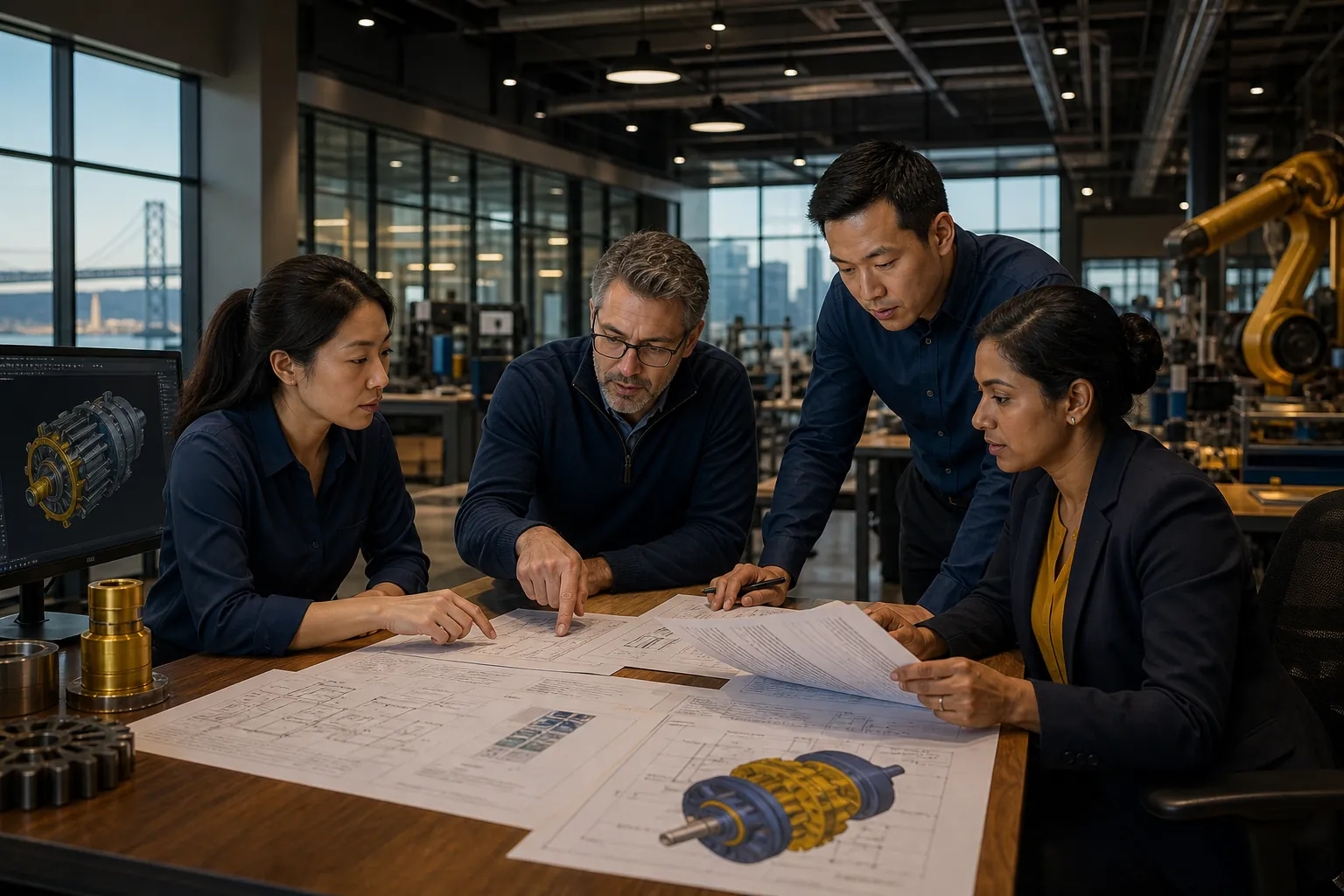
Manufacturing translation is a specialized branch of technical translation. It is not simply converting words from one language to another — it is ensuring that every dimension, specification, safety warning, process step, and regulatory reference conveys the same precise meaning across languages.
High-quality manufacturing translation services typically cover:
- Technical manuals and operator guides — installation, operation, maintenance, and troubleshooting documentation for machinery and equipment
- Safety data sheets (SDS/MSDS) — chemical hazard communication required under OSHA HazCom and international GHS standards
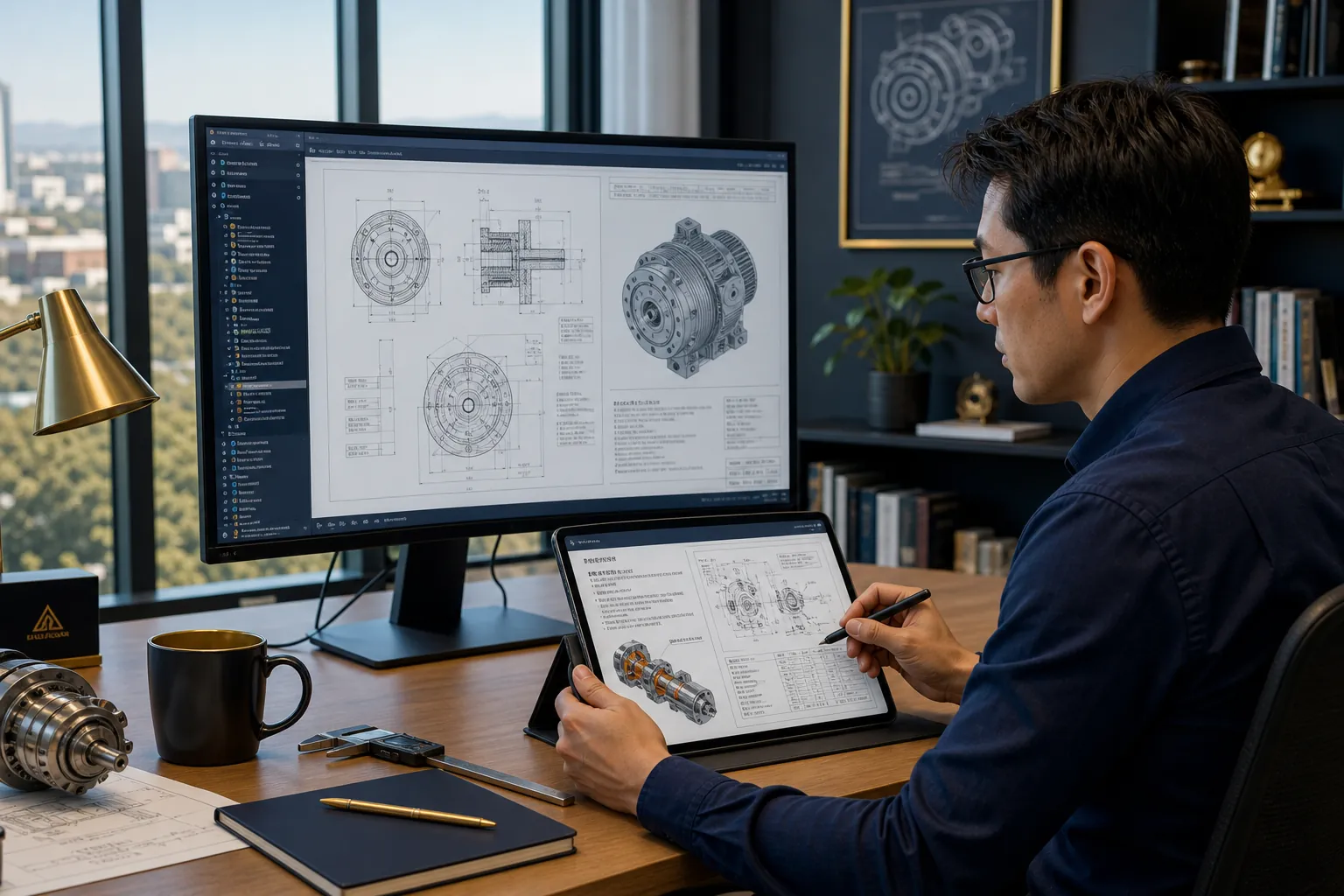
- Engineering drawings and specifications — CAD annotations, tolerances, material callouts, and process specifications
- Quality management documentation — ISO 9001 procedures, quality control forms, audit checklists, and inspection reports
- Regulatory compliance documents — CE declarations, RoHS certifications, product safety filings, and import/export documentation
- Supplier contracts and purchase orders — procurement agreements, terms and conditions, and supplier quality agreements
- Training materials — operator training guides, safety induction programs, and video subtitles or scripts
- Packaging and labeling — product labels, warning symbols, usage instructions, and country-of-origin statements
Each of these document types demands a translator who knows the industry. A Master’s-level linguist with a background in mechanical engineering reads a torque specification differently than a general translator — and that difference matters when the spec is in Chinese, German, Japanese, or Portuguese and your Bay Area engineering team needs to act on it.
3. Key Document Types That Require Expert Translation
Technical Manuals
No document type illustrates the stakes of precision more clearly than a technical manual. When a manufacturer ships equipment to a facility in Germany, Brazil, or South Korea, the operators in that facility must be able to install, calibrate, and maintain that equipment safely — entirely from the manual you provide.
One of Auerbach International’s long-standing technical clients — a manufacturer of specialized industrial systems — brought us fifteen Russian-language technical manuals after discovering that a prior translation had introduced errors that were actually being carried forward into maintenance procedures. Our linguists, each with relevant engineering subject-matter expertise, identified and corrected the errors and produced new manuals the client could stand behind.
That kind of quality assurance does not happen when documentation is routed through a generalist agency or a machine-translation pipeline without expert human review.
Safety Data Sheets
Under the Globally Harmonized System (GHS) — adopted in the U.S. through OSHA’s Hazard Communication Standard — every hazardous chemical used in manufacturing must have an SDS available to workers in a language they understand. For Bay Area companies with multilingual workforces that include Spanish, Mandarin, Vietnamese, and Tagalog speakers, this is not optional.
An SDS contains sixteen standardized sections covering everything from physical properties to first-aid measures to disposal instructions. A mistranslation in the emergency response section is not a minor error — it is a safety incident waiting to happen.
Supplier Contracts and Quality Agreements
When a Bay Area company sources components from a supplier in Taiwan, Mexico, or Poland, every contract clause matters. Warranty language, defect rate tolerances, penalty provisions, and IP ownership terms must translate not just accurately but legally — with the same contractual force in the target language as in the source.
This is where subject-matter expertise at the intersection of legal and technical translation becomes critical. A linguist who understands both procurement terminology and contract law produces a far more reliable agreement than one working from a template or a general-purpose glossary. Auerbach’s client roster includes Fortune 100 corporations, government agencies, and global manufacturers who have trusted us with exactly this kind of high-stakes documentation for over three decades.
4. Global Supply Chains and the Silicon Valley Manufacturing Ecosystem
Silicon Valley is a design hub, but it is also a procurement and supply chain hub. The chips fabbed in Taiwan, the sensors assembled in Malaysia, the precision castings sourced from Germany — Bay Area manufacturers sit at the center of a deeply international supply chain, and every node in that chain communicates in a different language.
The languages most commonly encountered in Bay Area manufacturing supply chains include:
- Mandarin Chinese — semiconductor, electronics, and consumer goods supply chains
- Japanese — precision manufacturing, automotive components, advanced robotics
- Korean — semiconductor equipment, display technology, clean energy
- German — industrial machinery, automotive, chemical, and engineering sectors
- Spanish — nearshore manufacturing partners in Mexico, plus domestic workforce compliance
- Portuguese — Brazilian manufacturing partners in electronics and aerospace
- Vietnamese — fast-growing electronics and apparel manufacturing hub
Auerbach International supports manufacturing translation in over 120 languages, staffed by thousands of native-speaking linguists with subject-matter expertise. When your procurement team in San Jose needs to review a quality failure report from a supplier in Shenzhen, or when your operations director needs to brief a new manufacturing partner in Monterrey, we have the right linguists ready.
The Bay Area’s role as a global manufacturing and technology hub is only growing. Companies that build robust multilingual communication into their supply chain operations reduce risk, accelerate timelines, and build stronger international partnerships. Those that rely on informal translation or AI-only tools accumulate risk with every poorly translated document.
5. Why AI Alone Cannot Handle Manufacturing Translation
Machine translation tools have improved dramatically over the past several years. For internal messaging or informal reference, they can be useful. But for manufacturing documentation — technical manuals, SDS sheets, regulatory filings, supplier contracts — AI-only translation introduces risks that no Bay Area manufacturer should accept.
Subject-Matter Knowledge Cannot Be Improvised
Manufacturing translation requires a linguist who understands what he or she is translating at a technical level. If translators do not understand the mechanics of a hydraulic bypass valve, they cannot tell when a translated sentence — while grammatically correct — describes the procedure backwards. AI systems do not have subject-matter understanding. They identify patterns in training data. For a standard sentence, that is often sufficient. For a safety-critical technical specification, it is not.
Terminology Consistency Demands Human Oversight
Manufacturing documentation depends on consistent terminology. A component called a “bushing” in section 2 of a manual cannot become a “sleeve” in section 7 because the model made a different choice. Inconsistent terminology leads to operator confusion, maintenance errors, and quality failures. Expert human translators — guided by client-approved glossaries and translation memories — maintain that consistency throughout a document and across a product’s entire documentation library.
Regulatory Language Has No Margin for Nuance Gaps
When a regulatory filing in Japan requires specific statutory language, or when a CE declaration must mirror an EU directive’s exact phrasing, AI tools that approximate meaning are not sufficient. These documents require linguists who understand both the regulatory framework and the linguistic conventions of the target jurisdiction. Auerbach’s team includes translators with direct expertise in international regulatory contexts — the kind of professionals who know not just what a regulation says, but how it is interpreted and enforced in practice.
Auerbach International’s hybrid approach uses AI-assisted tools to support efficiency — terminology lookups, translation memory matching, formatting automation — but every manufacturing translation is reviewed, edited, and approved by a qualified human linguist. That is the standard the industry’s most demanding clients require, and it is the standard we have maintained for over 35 years.
Need manufacturing translation services for your Bay Area or global supply chain?
Auerbach International’s subject-matter experts translate technical manuals, SDS sheets, supplier contracts, and compliance documents in 120+ languages.
→ https://auerbach-intl.com/get-quote/
6. What a High-Quality Manufacturing Translation Partner Looks Like
Not every translation agency can support a manufacturing client’s full documentation needs. When evaluating a language services partner for manufacturing work, look for these indicators:
- 1. Domain-Specific Linguists — The agency should be able to match your project to a linguist who has direct expertise in your field — mechanical, electrical, chemical, biomedical, or industrial.
- 2. Certified Translation Where Required — Some manufacturing documents require certified translation with a signed statement of accuracy. Your partner should be able to provide this without treating it as an unusual request.
- 3. Terminology Management — Does the agency maintain client-specific glossaries and translation memories? Consistent terminology across a product’s entire documentation suite is a quality requirement, not an option.
- 4. Confidentiality and IP Protection — Manufacturing documentation often contains proprietary information — design specifications, process parameters, cost structures in supplier agreements. Your translation partner must operate under strict confidentiality agreements.
- 5. Scalability and Rush Capacity — When a product recall requires emergency translation of updated safety instructions in twelve languages, your translation partner needs the capacity to respond. Auerbach’s network of thousands of linguists across 120+ languages means we can scale to meet urgent needs without sacrificing quality.

7. Frequently Asked Questions About Manufacturing Translation Services
What types of manufacturing documents does Auerbach International translate?
We translate the full range of manufacturing documentation: technical manuals, operator and maintenance guides, safety data sheets (SDS/MSDS), engineering specifications, quality management procedures, ISO compliance documents, regulatory filings, supplier contracts, training materials, packaging and labeling copy, and video scripts or subtitles for training content. If it is written and it matters to your manufacturing operation, we can translate it.
Do you provide certified translation for manufacturing documents?
Yes. For regulatory filings, import/export certifications, legal contracts, and other documents that require a certified translation, we provide a signed certificate of accuracy with each completed translation. We are experienced with the certification requirements of U.S. regulatory bodies as well as international certification standards.
How do you ensure terminology consistency across a large documentation project?
We build and maintain client-specific terminology glossaries and use translation memory software to ensure that approved terms are applied consistently throughout every document in a project. For long-term manufacturing clients, we maintain a growing translation memory that improves quality and reduces cost over time.
Can you handle rush manufacturing translation projects?
Yes. Auerbach International has deep linguist capacity across 120+ languages and has handled urgent manufacturing translation projects — including multi-language technical manual updates, emergency SDS translations, and time-sensitive regulatory filings — many times over our 35+ years in business. Contact us as early as possible, and we will assess feasibility and give you a realistic timeline.
How do Bay Area manufacturing companies typically work with Auerbach International?
Many of our Bay Area manufacturing clients start with a single project — a technical manual, a set of supplier contracts, or an SDS update — and then build an ongoing relationship as they see the quality difference. We assign dedicated project managers who learn your documentation standards, build your terminology glossary, and manage deadlines across complex multi-document projects.
Do your translators have engineering or technical backgrounds?
Yes. For manufacturing translation projects, we match each assignment to a linguist who has relevant subject-matter expertise in addition to native-level fluency and professional translation credentials. A manual for a semiconductor fabrication process goes to a linguist with a background in electrical engineering or materials science — not to a generalist. This is a foundational commitment at Auerbach International, not an upsell.
What languages do you support for manufacturing translation?
We support 120+ languages, including all the major languages of global manufacturing supply chains: Mandarin Chinese, Japanese, Korean, German, Spanish, Portuguese, French, Italian, Russian, Arabic, Vietnamese, Thai, and dozens more. If your supply chain has a language need, we almost certainly have qualified translators for it.
8. Protect Your Supply Chain With Manufacturing Translation Services That Get It Right
Bay Area manufacturers operate in one of the most globally connected industrial ecosystems on earth. Your technical documentation, safety records, supplier agreements, and regulatory filings are the connective tissue of that ecosystem — and they need to communicate with the same precision in every language your partners, regulators, and workers use.
Auerbach International has been providing manufacturing companies with expert translation services since 1990. Our linguists combine native-level fluency with deep subject-matter expertise. Our project managers build long-term relationships, maintain your terminology standards, and deliver on time. And our commitment to accuracy is backed by a 35-year reputation that Fortune 100 clients, government agencies, and fast-growing Bay Area companies have trusted with their most sensitive documentation.
Do not let a mistranslated manual shut down your production line. Do not let a poorly rendered SDS create a compliance gap. Do not let a supplier agreement with ambiguous translated terms expose your company to unintended liability.
Request a Free Manufacturing Translation Quote
→ https://auerbach-intl.com/get-quote/