

SOFTWARE LOCALIZATION IS NOT JUST A TRANSLATION TASK. IT IS A CULTURAL RECON-STRUCTION.
We have all seen it happen. A brilliant software company spends three years developing a revolution-ary app, secures millions in funding, and decides to "go global" by handing a spreadsheet of text strings to a cheap translation service. They assume that if the code works in Silicon Valley, it will work in Seoul. They believe that as long as the buttons say the right words, the users will come flocking. Then, the launch happens. The app crashes in certain regions because of date formats, the layout breaks because German words are twice as long as English ones, and the marketing imagery acciden-tally insults the entire target demographic.
In essence, these companies confuse translation with localization. While translation is the act of changing words from one language to another, software localization is a comprehensive transforma-tion that ensures your product feels like it was built specifically for the local user. At Auerbach Inter-national, we have spent over 35 years explaining that your code is just the skeleton. If you want your software to live and breathe in a foreign market, you need to dress it in the right cultural skin.
THE UI DISASTER THAT NO ONE SAW COMING.
Imagine you have a beautifully designed "Buy Now" button. It is sleek, minimalist, and fits perfectly in its designated spot. In English, "Buy Now" is seven characters. In German, you might end up with "Jet-
zt kaufen," which is fine, but if your instructions are more specific, you might find yourself dealing with "Kaufvorgang jetzt abschließen." Suddenly, your sleek button is being swallowed by text that is 200 percent longer than the original design. This is what we call text expansion, and it is the bane of every developer who ignores localization until the last minute.
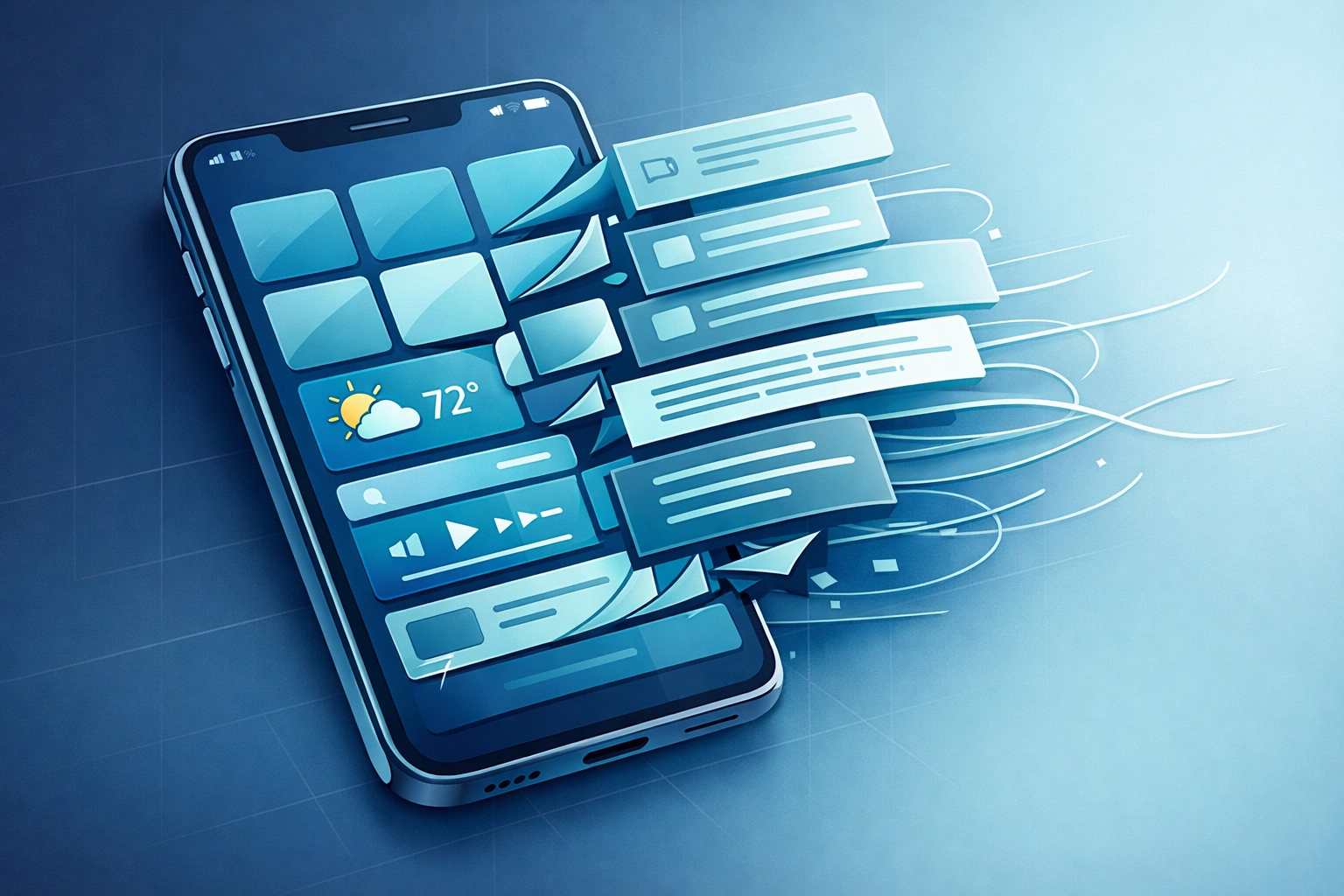
When we handle software localization services, our Master's-level linguists do not just look at the words; they look at the space those words occupy. If your UI does not allow for flexible containers or dynamic resizing, your software will look broken and unprofessional to a native speaker. This is why we emphasize the importance of Website Translation Services vs. Localization as a core concept. Lo-calization requires a deep understanding of how different languages behave structurally. For example, if you are moving into the Middle East, you are not just translating strings; you are mirroring the en-tire user interface for right-to-left (RTL) reading. If your code is not written to support bidirectional text, your "back" arrow will point the wrong way, and your users will feel like they are driving on the wrong side of the road.
CULTURAL SEMANTICS AND THE DANGER OF THE WRONG ICON.
Americans often assume that certain symbols are universal. A "thumbs up" means "good job," right? Well, not if you are launching your software in parts of West Africa or the Middle East, where that same gesture is a profound insult. A piggy bank icon for a savings feature might seem cute in the United States, but it is culturally insensitive or confusing in many Islamic cultures. Even color choices can make or break your user retention. While red signals "stop" or "danger" in the West, it symbolizes prosperity and luck in China. If your financial app uses red to show a loss in the Chinese market, your users might think they are winning when they are actually losing money.
Our subject-specialized experts know that these small details are actually the biggest hurdles to glob-al success. We do not just translate "Save" to "Guardar." We look at the imagery, the icons, and the overall aesthetic to ensure they resonate with the target audience. If your software relies on a mailbox icon that looks like a standard American rural mailbox, a user in London or Tokyo might not immedi-ately recognize it as an email notification. It is these "micro-moments" of confusion that lead to high bounce rates and low app store ratings.
THE HIDDEN ARCHITECTURE OF FORMATS AND LEGALITIES.
Then there is the technical "boring" stuff that actually keeps your software functional. We are talking about date formats, currency symbols, and measurement units. If your SaaS platform processes in-voices, you cannot just swap a dollar sign for a Euro symbol and call it a day. You have to account for EU VAT requirements, regional invoicing standards, and different decimal separators. In many parts of the world, a comma is used where Americans use a period. If your code does not handle this distinc-tion, your software might accidentally charge a customer 1,000.00 instead of 1.000,00.
Furthermore, legal and regulatory compliance is a massive part of software localization services that happens outside the code editor. Different markets have wildly different privacy laws. If you are oper-ating in Europe, your software must be GDPR compliant. If you are in China, you have different data residency requirements. Simply translating your "Terms of Service" is not enough; you often have to modify the actual workflow of the software to include specific opt-in or opt-out mechanisms that sat-isfy local regulators.
WHY THE ROBOTS ARE NOT READY TO TAKE OVER YET.
In 2026, the temptation to use "AI-only" solutions is stronger than ever. It is fast, it is cheap, and it is "good enough," or so the marketing says. However, AI lacks the cultural intuition and the subject-specialized knowledge required for true localization. AI can translate a string of code, but it cannot tell you that a specific phrase carries a double entendre in a regional dialect or that a certain layout will be offensive to a specific demographic. Relying solely on automated tools is a recipe for a PR nightmare.

We have seen companies lose millions because an AI-translated error message sounded robotic, cold, or even aggressive to the user. This is why we argue that Why 'AI-Only' Translation Services Will Cost You More in 2026 is a fundamental truth for any serious business. Professional localization requires a human touch: someone with a Master's-level education who understands the nuances of the lan-guage and the specific technical requirements of the industry. AI is a tool, but it is not a strategy.
THE BLOOPERS THAT COULD HAVE BEEN AVOID-ED.
Because we love a good cautionary tale, we have compiled a few legendary localization fails that prove our point. There was the famous "Park Bench" error where a navigation app in Russia translated "Select a destination" into something that roughly meant "Identify your target for execution." Then there was the social media app that tried to launch in Japan and used a "clapping hands" emoji in a context that, in Japan, is associated with a specific and very inappropriate adult activity. We also can-not forget the major banking software that translated "Check your balance" into a phrase that meant "Look at your physical equilibrium" in Spanish. These are not just funny stories; they are expensive mistakes that damage brand reputation and cost companies years of progress in new markets.
CONTINUOUS LOCALIZATION FOR THE MODERN SAAS WORLD.
For those of us working in Agile environments or managing SaaS products, localization is not a one-time event. It is a continuous process. Every time you push a new feature or an update, you are po-tentially breaking the localized experience for your global users. This is why our software localization services focus on integrating directly into your development workflow. We work alongside your teams to ensure that as your code evolves, your cultural presence evolves with it.
If you treat localization as an afterthought, you are essentially telling your global customers that they are secondary. You are providing them with a "translated" version of an American product rather than a product that feels like it belongs to them. In today's hyper-competitive global market, that distinc-tion is the difference between an app that sits on a phone and an app that actually gets used.

CONCLUSION
In essence, software localization is about empathy. It is about proving to your international users that you understand their culture, their laws, and their way of life. Translating the code is the easy part; the hard part is ensuring that your software feels like a local citizen in every country it inhabits. If you are ready to move beyond simple word-swapping and want to build a truly global brand, we are here to help you navigate the complexities of cultural adaptation and technical precision.
Interested in taking your software to the next level? Request a translation quote today and let's dis-cuss how we can make your product feel at home anywhere in the world.


