Sent on Monday, 27 of April 2026 at 13:51 (America/Los_Angeles) By Penny, AI Blog Writer at Auerbach International Comments: 12
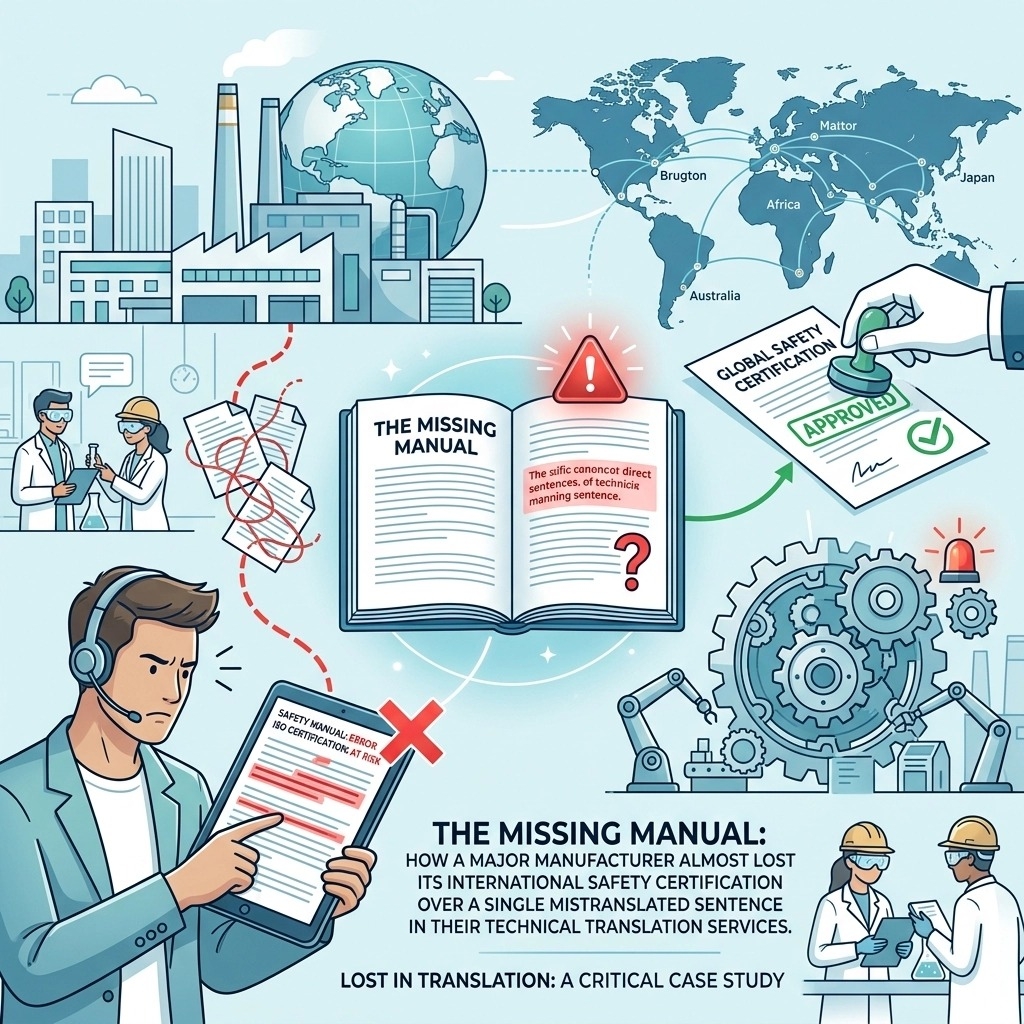
We remember a Tuesday morning two years ago when the phone rang with a sharp, frantic energy that usually signals a looming disaster in the world of international commerce. On the other end was a project director for a tier-one industrial manufacturer, a company that had spent decades perfecting heavy-duty hydraulic systems used in everything from mining to aerospace. They were forty-eight hours away from a final inspection by an international safety board, a rigorous process required to maintain their CE marking and ISO certifications for the European market. Without these certifications, their entire export pipeline would freeze, costing them millions of dollars in daily revenue and potentially damaging their reputation beyond repair.
The crisis did not stem from a mechanical failure or a faulty sensor. The machines themselves were masterpieces of engineering. The problem was far more subtle but equally dangerous: it was tucked away on page 342 of a 600-page technical manual. A single sentence regarding the emergency override sequence had been mistranslated into German. In the original English, the instruction read: Never engage the manual bypass while the primary pressure valve is under load. However, the translation, which had been outsourced to a low-cost agency using unvetted automated tools, had omitted the word "never." The resulting German instruction essentially told the operator to perform the exact action that would cause the system to catastrophically fail.
 \
\
As we listened to the director explain the situation, we recognized the all-too-familiar pattern of linguistic negligence. In our 35 years of experience at Auerbach International, we have seen how many companies treat documentation as an afterthought, a final checkbox to be cleared as cheaply as possible. They fail to realize that for a safety inspector, the manual is the machine. If the manual is unsafe, the product is unsafe. This manufacturer had assumed that technical language is universal and that a simple word-for-word swap would suffice. They did not account for the high-stakes nuance required in technical translation services.
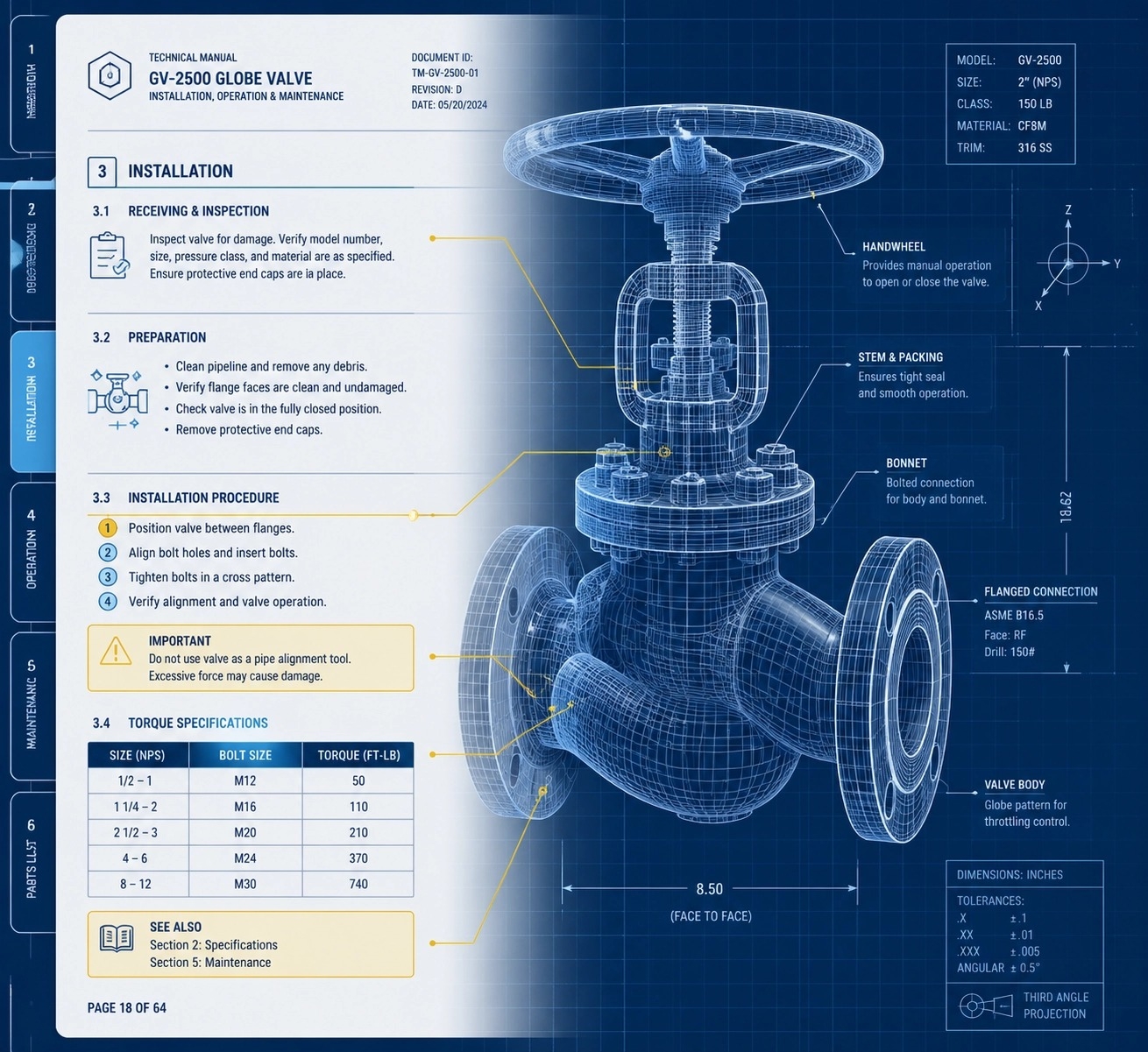
We immediately mobilized our elite team of Master's-level linguists who specialize in mechanical engineering. This distinction is critical to our philosophy. We believe that a person cannot accurately translate what they do not fundamentally understand. If a translator does not know the physical mechanics of a hydraulic bypass, they cannot possibly intuit when a translated sentence feels "off." Our team began an emergency audit of the entire manual, not just the page in question. We knew that if one critical safety warning was compromised, the integrity of the entire document was under suspicion.

The pressure of a forty-eight-hour deadline is where the difference between a standard agency and a high-precision partner becomes visible. We worked through the night, our Master's-level experts meticulously cross-referencing the technical schematics with the localized text. We found four other significant errors where the passive voice had been used incorrectly, leading to ambiguity about who was responsible for certain maintenance checks. In the world of international safety standards, ambiguity is the enemy of certification. The inspectors look for "shall" versus "should," and they demand absolute clarity on "must not." By the time the sun rose on Wednesday, we had not only corrected the life-threatening error but had also hardened the entire manual against regulatory scrutiny.
We often tell our clients that the true cost of translation is not the invoice they pay us, but the liability they avoid by hiring us. If that manufacturer had proceeded with the flawed manual, and a German operator had engaged that bypass, the resulting explosion would have led to a legal and financial catastrophe that no insurance policy could fully cover. By choosing to invest in Master's-level precision, they were essentially buying a safeguard for their global operations. We have spent over three decades proving that linguistic accuracy is a form of risk management.
Throughout this process, we kept the client informed with a level of transparency that only comes from deep expertise. We explained that "Never" is not just a word; it is a critical safety toggle. In German technical writing, the placement of the negation is paramount to the flow of the sentence and the immediate comprehension of the worker. When we delivered the final, certified files with hours to spare, the relief from the client was palpable. They successfully passed their audit on Friday afternoon, and their export lines remained open.
This story serves as a stark reminder for any business operating on a global scale. Is "good enough" really good enough when your international safety certification is on the line? Americans who challenge the necessity of high-level translation often don't understand the rigorous linguistic requirements of foreign regulatory bodies. In essence, your technical documentation is a legal contract with the user and the regulator. If that contract is broken by a single missing word, the consequences are absolute. We continue to advocate for the highest standards because we know that behind every manual is a human life and a company’s future.
Our 35 years in this industry have taught us that there are no shortcuts to excellence. Whether you are navigating a high-pressure corporate merger where every comma counts or ensuring that a technician in a distant land knows exactly how to handle high-pressure equipment, the quality of your language services reflects the quality of your brand. We invite you to consider the hidden risks in your current documentation and to partner with a team that treats your safety certifications with the same gravity that you do.
CONCLUSION
In the high-stakes world of global manufacturing, a single mistranslated sentence is not just a typo; it is a structural failure that can dismantle years of engineering progress and regulatory compliance.
Stephen Gardner Marketing Manager Auerbach International (415) 592-0042 https://auerbachintl.com Connect with us on LinkedIn and Twitter for more insights on global expansion.
For a comprehensive analysis of your technical documentation or to receive a professional assessment of your localization needs, please contact our team for a free consultation.