

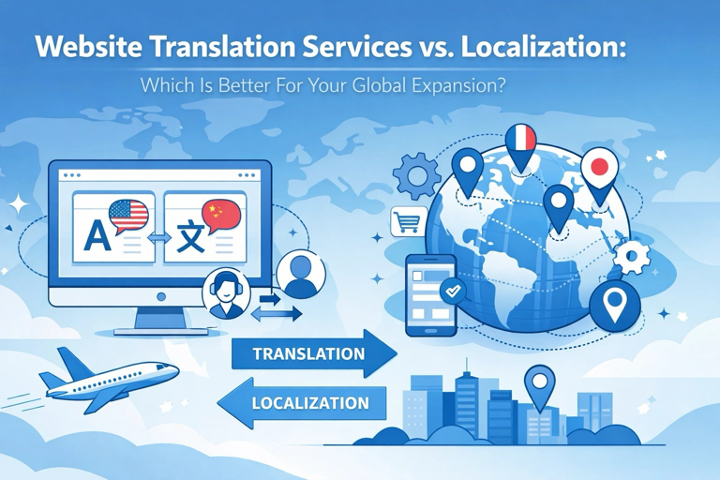
Understanding Website Translation Services
Translation is the foundation. It's the process of converting text from one language to another while maintaining the original meaning. When you hire professional language services and translation providers to translate your website, they're taking your English content and rendering it accurately in Spanish, German, Mandarin, or whatever target language you've chosen.
This is a linguistic exercise. A skilled translator reads your homepage description about cloud-based project management software and rewrites it in Japanese. The words change, but the message stays the same. Your bullet points about features and benefits get converted. Your calls to action get rewritten in the target language. Your product specifications get translated. The structure of your site remains identical, just in a different language.
Website translation services work well when you're dealing with straightforward, information-heavy content. Technical specifications, product dimensions, ingredient lists, and basic service descriptions translate relatively cleanly across languages. If your website is primarily informational and your products or services are universally understood, translation alone might get you 70 to 80 percent of the way there.
But here's where translation starts to show its limitations. Language isn't just about words. It's about context, cultural assumptions, and the way people think. A direct translation of "We're passionate about helping small businesses grow" might be grammatically perfect in German, but does it resonate with German business owners the way your original copy resonates with Americans? Maybe. Maybe not.
What Localization Services Actually Include
Localization goes several steps further. It adapts your website not just linguistically, but culturally, functionally, and legally for a specific market. Think of translation as changing the words on the page. Localization changes the entire experience.
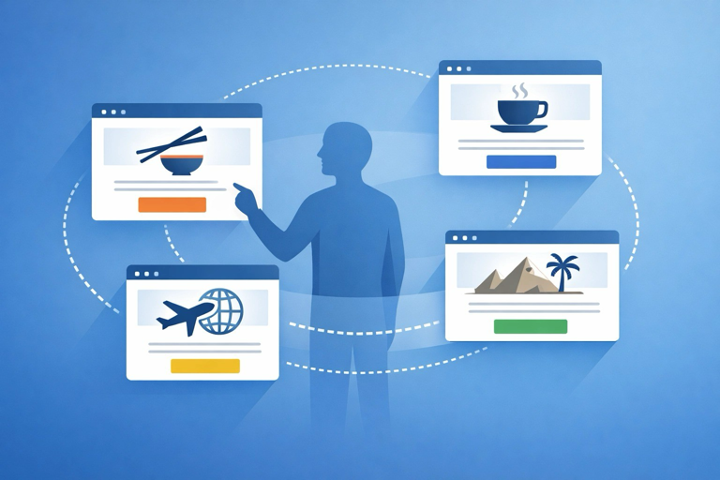
When you work with localization services, you're asking professionals to think like your target audience. This means adjusting date formats from month/day/year to day/month/year in most of Europe. It means converting measurements from imperial to metric. It means swapping out images that feature distinctly American scenes with visuals that feel native to your target market. Colors matter too. White symbolizes purity in Western cultures but represents mourning in parts of Asia. Red signals danger in the U.S., but prosperity and celebration in China.
Payment methods need localization. American websites default to credit cards, but in Germany, direct bank transfers and payment systems like Klarna dominate. In China, you need Alipay and WeChat Pay integration or you're not even in the game. Your checkout process might need restructuring entirely based on local preferences for how people shop online.
Then there's the legal side. Privacy policies need updating to comply with GDPR in Europe. Terms and conditions have different requirements in different countries. Product disclaimers, return policies, and customer service contact information all need adjustment for local regulations and expectations.
Even your content strategy changes with localization. The length of your text will shift dramatically between languages. French translations typically run 25 to 30 percent longer than English originals. Finnish and German can be more concise. This affects your entire design. That perfectly crafted headline that fits beautifully in your navigation menu? It might break across three lines in French, destroying your carefully designed user interface.

The Real Cost of Getting It Wrong
A poorly translated website is embarrassing. A poorly localized website can sink your entire market entry. The difference between the two becomes crystal clear when you look at actual business outcomes.
Take the classic example of HSBC Bank. They spent millions on a global branding campaign with the tagline "Assume Nothing." When translated directly into various markets, it came across in some regions as "Do Nothing." The bank eventually had to rebrand at an estimated cost of ten million dollars. That's what happens when you translate words without considering cultural context.
Or consider the American company that launched a website in China with a direct translation of their "Become a Partner" call to action. In Chinese business culture, partnership implies a much deeper, more formal relationship than the casual American use of the term. The translation was linguistically correct but culturally confusing, leading to a significant drop in sign-ups compared to projections.
Localization prevents these failures. It catches the nuances before they become expensive mistakes. At Auerbach International, we've spent more than 35 years helping companies navigate exactly these challenges. Our founder, Philip Auerbach, built this company on the principle that language services aren't just about converting words but about building bridges between cultures.
When Translation Alone Makes Sense
Despite everything I've just explained, there are absolutely times when straightforward website translation services are the right choice. If you're testing a new market with a limited budget, translation gives you quick entry at a lower cost. You can get your site live in Portuguese or Polish, see if there's demand, and then invest in deeper localization if the market proves viable.
Translation works well for highly technical content where cultural adaptation matters less than accuracy. If you're selling industrial equipment with detailed specifications, your Brazilian customers care more about accurate technical translations than whether your homepage photo features American or Brazilian workers. The engineering details are universal.
Translation also makes sense for content that's already somewhat culturally neutral. Many B2B service descriptions, software feature lists, and educational content translate cleanly without extensive adaptation. If your messaging is already straightforward and fact-based rather than emotionally driven or culturally specific, translation might be sufficient.
The key question is whether you're aiming for market presence or market penetration. Translation gives you presence. It makes your content accessible to speakers of another language. Localization gives you penetration. It makes your content feel native, which drives engagement, trust, and conversion.
When Localization Becomes Essential
Full localization is non-negotiable in certain situations. If you're entering a market where you face established local competitors, you need every advantage. A German customer comparing your translated website against a competitor's native German site will notice the difference immediately. Every awkward phrase, every American-centric reference, every unconverted measurement signal that you're an outsider who didn't care enough to adapt.
Consumer-facing brands need localization more than B2B companies. When you're selling directly to individuals, cultural fit matters enormously. People buy from brands they relate to, brands that feel like they understand them. A localized website sends the message that you've invested in understanding the market. A merely translated site suggests you're testing the waters without real commitment.
Regulated industries can't skip localization. Financial services, healthcare, legal services, and government contractors face strict compliance requirements that vary by country. Your privacy policy, terms of service, and regulatory disclosures need legal review and adaptation for each market. Translation alone won't meet these requirements.
E-commerce absolutely requires localization. Beyond language, you're dealing with payment processing, shipping logistics, return policies, customer service in local time zones, and localized marketing that connects with how people in that region actually shop. Amazon succeeds globally not because they translate their site but because they localize the entire shopping experience for each major market.

The Cultural Intelligence Factor
Here's something most companies miss. Localization isn't just about avoiding mistakes. It's about creating a competitive advantage through cultural intelligence. When you deeply understand a market, you can adapt your messaging to resonate in ways your competitors don't.
Consider the approach to global marketing that actually works. American websites tend to be direct, benefit-focused, and individualistic. "Transform your productivity. Get more done in less time." That messaging works in the U.S., but it might fall flat in Japan, where group harmony and long-term relationships matter more than individual productivity gains. A localized approach would reframe the same product around team efficiency and supporting collective goals.
Humor doesn't travel well without localization. Sarcasm, pop culture references, and wordplay that seem clever in English often become confusing or offensive when directly translated. Sports metaphors common in American business writing mean nothing in countries where those sports aren't played. A localized approach replaces these with culturally relevant equivalents or removes them entirely.
Even something as simple as how you present authority and expertise varies by culture. American websites often use casual, approachable language to build trust. Many European and Asian markets expect more formal, credential-heavy presentations. The same company might need to present itself differently across markets, not because they're being inauthentic, but because credibility signals vary by culture.
The Auerbach Approach to Website Adaptation
At Auerbach International, we don't see this as an either-or decision. Most successful global expansion strategies use translation as the foundation and layer localization on top based on market priority and business goals. We start by understanding what you're trying to accomplish. Are you entering five new markets simultaneously with a limited budget? We might recommend translation for all five, with deeper localization for the one or two markets with the highest potential.
Are you making a major push into a single strategic market where you're investing heavily in marketing and local partnerships? Then we recommend comprehensive localization from the start. The additional investment pays for itself quickly when your localized site converts at two or three times the rate of a merely translated version.
Our team includes native speakers with subject matter expertise who understand both language and culture. When we localize a website for the German market, you're working with German professionals who understand German business culture, consumer expectations, and digital marketing norms. They're not just translating words. They're adapting your entire digital presence to succeed in that specific market.
We also factor in the technical side that many translation agencies overlook. Character encoding for different alphabets, right-to-left language support for Arabic and Hebrew, dynamic content that adjusts based on user location, and international SEO optimization so your localized pages actually get found by local searchers. These technical elements are just as important as the cultural adaptation.
Making the Right Choice for Your Business
So which approach is better for your global expansion? The honest answer is that it depends on your specific situation, but here's how to think through the decision.
Start with your business objectives. If you're testing market viability with minimal investment, translation is a reasonable starting point. If you're committed to winning in a new market and facing established competition, localization is essential. Consider your industry and product type. The more your success depends on cultural fit and trust, the more important localization becomes.
Look at your timeline. Translation can happen relatively quickly. Comprehensive localization takes longer because it requires cultural consultation, design adaptation, and thorough testing. If you need to launch fast, you might start with translation and iterate toward fuller localization over time.
Think about your competitive position. If you're first to market or offering something truly unique, you can potentially succeed with translation alone because customers have fewer alternatives. If you're entering an established market, localization helps you compete on equal footing with local players who have the home-field advantage.
Consider the long-term view. Many companies that start with translation end up investing in localization later when they realize they're not getting the traction they expected. This approach works, but you're essentially paying twice. If you're confident about a market's strategic importance, investing in localization from the start often proves more cost-effective over time.
The Bottom Line on Global Website Strategy
Website translation services and localization services aren't competing approaches. They're different levels of investment in international success. Translation makes your content accessible. Localization makes it effective. The best global website strategies use both, applying them strategically based on market importance, competitive dynamics, and business goals.
After more than three decades helping companies expand internationally, we've seen which approaches work and which fall short. The companies that succeed globally are the ones that respect cultural differences and invest appropriately in adapting their digital presence. They understand that a website isn't just information, it's an experience. And experiences don't translate. They need to be recreated for each market.
Ready to expand your digital presence globally? Whether you need straightforward translation or comprehensive localization, we can help you make the right strategic choice for your business. Get a free quote and let's discuss which approach will drive the best results for your specific market entry goals.

