

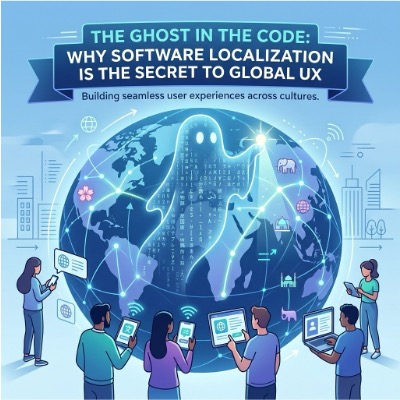
The high-stakes world of global software deployment often feels like a digital seance where developers attempt to summon a seamless user experience across borders, only to find themselves haunted by the very code they thought was perfected. For over thirty-five years, our team has observed a recurring tragedy in the tech sector: a brilliant application, meticulously engineered and rigorously tested in Silicon Valley or London, collapses into an incomprehensible mess the moment it crosses a digital frontier. This phenomenon is what we call the ghost in the code, a spectral presence of cultural misalignment and technical friction that occurs when software is merely translated rather than truly localized. Americans who challenge these assumptions often don't understand that a button labeled in English might require forty percent more horizontal space when rendered in German, or that an icon representing a mailbox in Ohio is a completely unrecognized object in rural Thailand.
In essence, the difference between a global success and a localized catastrophe lies in the Master's-level precision of the underlying architecture. When a company decides to scale internationally, they frequently treat language as an afterthought, a final coat of paint to be applied after the house is built. This is where the peril begins. True language services and translation are not just about swapping strings of text; they are about re-engineering the user journey to align with the psychological and technical expectations of a foreign market. If a user in Tokyo opens an app and finds that the date format is reversed, the currency symbols are misplaced, and the tone of voice feels jarringly aggressive, they will not blame a translation error. They will simply experience a product that feels broken, alien, and untrustworthy.

Consider the technical constraints that haunt the unwary developer. Most software is initially built using a character encoding that might not fully support the complexities of Asian logograms or the right-to-left flow of Middle Eastern scripts. When these systems are forced to display languages they weren't designed for, the "ghost" manifests as the dreaded "tofu": those empty rectangular boxes that appear when a system cannot render a character. This is not merely an aesthetic glitch; it is a fundamental failure of technical translation services to anticipate the requirements of a global infrastructure. Beyond the characters themselves, the logic of the code often contains hard-coded strings or concatenated sentences that break entirely when the grammar of the target language requires a different word order. Is "good enough" good enough when your application’s core functionality depends on a user understanding a sentence that has been chopped up and reassembled like a linguistic Frankenstein?
The stakes are quantified in a way that should make any Chief Product Officer pause. Statistics indicate that a dedicated focus on global UX localization can increase conversion rates by up to four00 percent, while a staggering ninety percent of users will abandon a platform after a single negative experience rooted in poor localization. The ghost in the code is a silent killer of ROI. When we look at the Master's-level approach to these challenges, we see that it requires a deep dive into "acculturation": the process of ensuring that every color, every sound, and every interactive element resonates with local norms. In some cultures, a red notification signifies a warning or an error, while in others, it is a symbol of prosperity and luck. If your software uses red to indicate a successful transaction in a market where it signals danger, you have effectively haunted your own user experience.

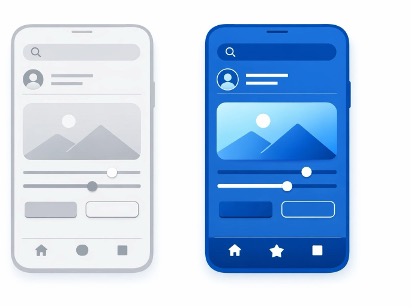
Of course, the most visible manifestations of these ghosts appear in the interface itself. Text expansion is a physical reality that dictates the success of a user interface. English is a remarkably compact language, but when translated into languages like Finnish or French, the word count can swell by thirty to fifty percent. Without a flexible design system, these longer strings will bleed over margins, overlap with other buttons, or be truncated into illegibility. This is why software localization is the secret to global UX; it forces a design to be resilient. A Master's-level localization expert doesn't just provide a list of words; they provide a blueprint for a global design system that can breathe and adapt to the linguistic weight of the world.
The peril of ignoring these factors extends into the realm of global compliance. In many jurisdictions, providing software in the local language is not a courtesy but a legal requirement for accessibility and safety. This is particularly true for medical, legal, or industrial software where a single misinterpreted instruction could lead to physical harm or legal liability. Relying on automated tools or amateur translators to handle legal translation services is akin to inviting a poltergeist into your corporate headquarters. The errors might seem small at first: a misplaced decimal point in a measurement or an incorrectly translated "Warning" label: but the cumulative effect is a product that is legally non-compliant and ethically compromised.
In our three decades of experience, we have encountered legendary bloopers that illustrate exactly why professional intervention is mandatory. We once saw a major electronics manufacturer attempt to enter the Spanish-speaking market with a software prompt that, due to a lack of cultural context, essentially asked the user to perform an impossible and anatomically confusing physical act rather than simply "refreshing the screen." Another instance involved a financial app that translated "save" as "rescue," leading users to believe the application was in an emergency state every time they tried to store their data. There was also the case of a global travel site that used an icon of a finger pointing to indicate "click here," which in certain Mediterranean cultures was perceived as a highly offensive gesture. These are not just funny stories; they are expensive lessons in the necessity of professional certified document translation and software localization.
The "IF" statements of global business are clear: IF you treat localization as a luxury, THEN you are planning for a regional ceiling rather than a global floor. IF you assume that your American UX is the universal standard, THEN you are ignoring the diverse ways in which the world processes information. The secret to exorcising the ghost in the code is to integrate localization into the earliest stages of development, a practice known as internationalization. By building code that is "localization-ready," companies can avoid the astronomical costs of retrofitting an entire software architecture once the ghosts have already settled in.

Ultimately, the goal of any software localization project is to achieve a state of digital "invisibility." A perfectly localized app doesn't feel like it was translated at all; it feels like it was designed specifically for the person using it, whether they are in a high-rise in Singapore or a cafe in Buenos Aires. This level of seamless integration requires more than just a dictionary; it requires a partnership with experts who understand the nuances of the Master's-level approach to language. We often suggest that our clients sign up for our newsletter to stay informed on these shifting cultural trends, as the digital landscape is in a constant state of flux.
In essence, global software success is not found in the lines of code that work the same everywhere, but in the attention paid to the code that must change everywhere. When you respect the cultural and linguistic identity of your user, you build a bridge of trust that spans oceans. When you ignore it, you build a haunted house that users will flee at the first opportunity. The backbone of global compliance and user satisfaction is a rigorous, professionally managed localization strategy that leaves nothing to chance.

If your organization is ready to move beyond basic translation and embrace a comprehensive strategy for your international growth, the first step is to recognize the complexity of the task at hand. Is your current UX truly global, or is it just an American product wearing a thin disguise? How will you know if your software is offending your customers before it’s too late? These are the questions that define the leaders of the next decade of digital innovation. To ensure your software is free of ghosts and ready for the world stage, we invite you to begin the process today. Our team is standing by to provide the expertise necessary to turn your global aspirations into a localized reality.
To receive a tailored strategy for your next project, we recommend you submit a translation quote request to see how our thirty-five years of experience can safeguard your brand. Whether you require language services interpretation for a product launch or a deep dive into technical localization, the path to a global user experience starts with the right partner.

